Chapter 2 - Introduction to Cyber Security and Machine Learning (Sample)
Copyright and License
All rights reserved. No part of this work may be reproduced or transmitted in any form or by any means, without written permission of the copyright owner.
MIT License.
FTC and Amazon Disclaimer
This post/page/article includes Amazon Affiliate links to products. This site receives income if you purchase through these links.
This income helps support content such as this one.

Introduction to Cyber Security and Machine Learning
Cyber Security is a very broad field. In general, it can be divided into areas such as network security, software assurance, social engineering, cryptography, etc. There are many other ways to divide it and this is just a suggested way to look at it. Here, I am loosely organizing the topics by the input medium (e.g. network data), or by the process (e.g. cryptography).
RCM
I have always told my students that before they think about all the technical aspects of cyber security, that they should create a Risk and Control Matrix (RCM). This is a very simple table or spread sheet mapping 3 things which are:
- Assets
- Threats
- Controls
Risk
Risk is sometimes mentioned as a term in cyber security to determine course of action. Risk can be quantified with probabilities and metrics from information theory can help us to make sense of the problem. If you do not know the exact probabilities, you can sometimes guess or arrive at them by speaking to organization stakeholders. This may be better understood with examples.Expected Risk given Threat and Impact Probabilities
In this example, assume we have "5" threats to our organization with associated individual threat probabilities (T probs.) and impact probabilitie s (I probs.). For each threat, we multiply its threat probability (T prob) with its corresponding impact probability (I prob). The goal is to make an informed decision as to which threat may have the highest expected risk. Given- 0.1 * 0.6
- 0.3 * 0.8
- 0.3 * 0.7
- etc
Entropy
We can also use the "Entropy" metric to determine how uncertain we are about a threat probability distribution. We can measure this in bits. The best way to understand this is to compare a sample test case to the 2 possible extremes in our threat level probability distribution. This can be seen in the next code listing:Computer Hacking
Many people think of computer hacking when they think about cyber security. So let us start here. A computer hack can be thought of as gaining un-authorized access to a computer information system. The classic scenario is to exploit vulnerabilities in software or firewalls. All computer systems use the concept of sockets. Sockets can be defined as tuples of IP addresses and port numbers. These IPs and ports help computers to communicate with each other. Let us think of two computers A and B that want to communicate with each other. To achieve this, a program in computer A with an IP will use a port in computer A to send out information in the form of computer packets. There packets are transmitted across networks seeking the IP for B. Once the packets reach B, they will try to go into computer B through a port number in B. This port in B must be open and will be linked with another program. That program will read the data sent from A and try to run it. It there is a vulnerability in the program in B, an attacker can send specially crafted data to exploit this vulnerability in the software in B. If the hack is successful, the attacker will try to affect one of the following pillars of information assurance:- Confidentiality
- Integrity
- Availability
- Non repudiation
- Authentication
Network Security
Network security relates to the security of the computer network environment. The unit in this environment is the network packet. Think of packets as little trains with information that are sent from one computer to another over computer networks and the internet (the rail lines). There are many protocols used to send this data across networks such as UDP/IP and TCP/IP. In general, data is encapsulated using several protocols as it is prepared to be sent across the network as network packets.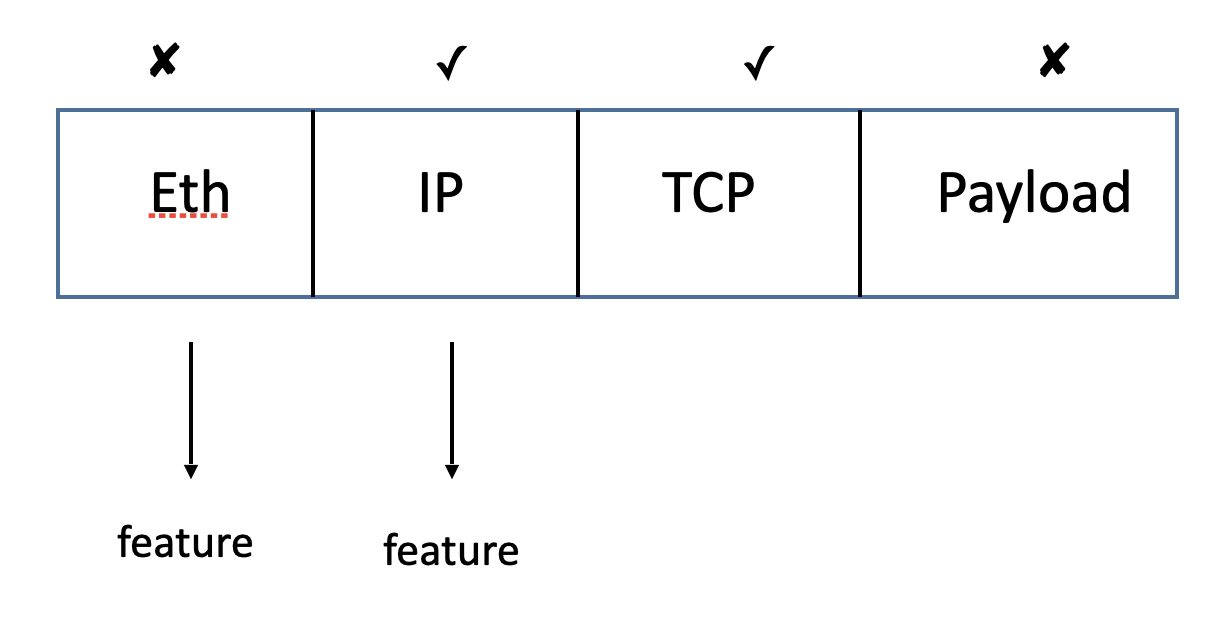
Putty, Virtual Box and linux VM
Virtual Box Linux setup for Windows Host:- Latest Putty if on Windows or SSH on MAC
- Linux VM -> Seed Labs
- Virtual Box
Software Security and Malware
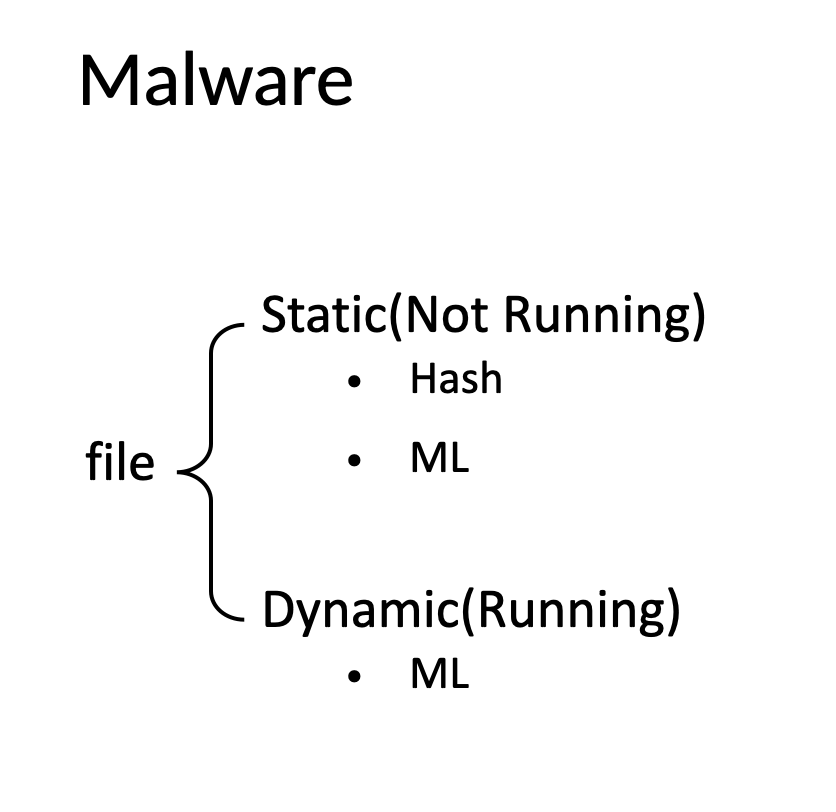
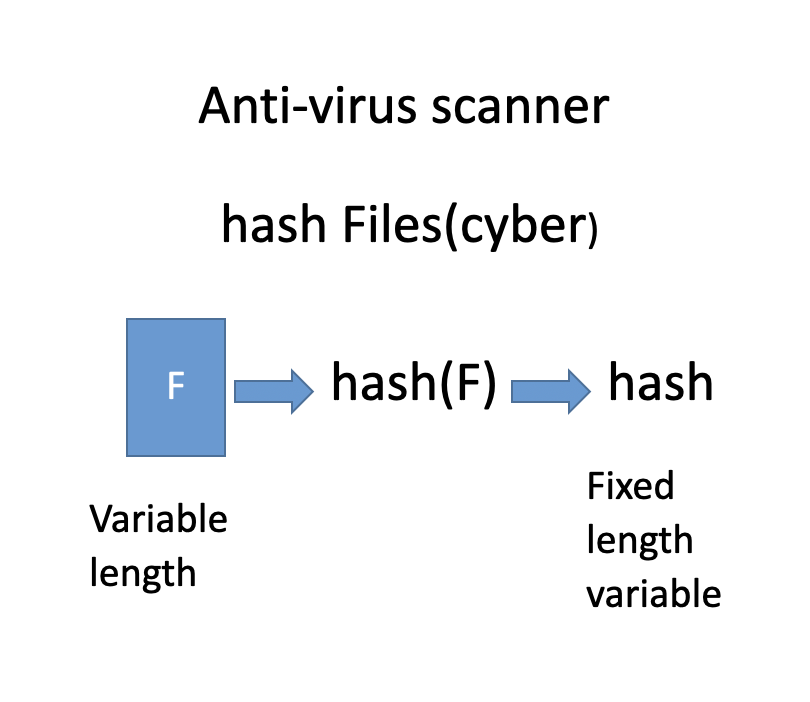
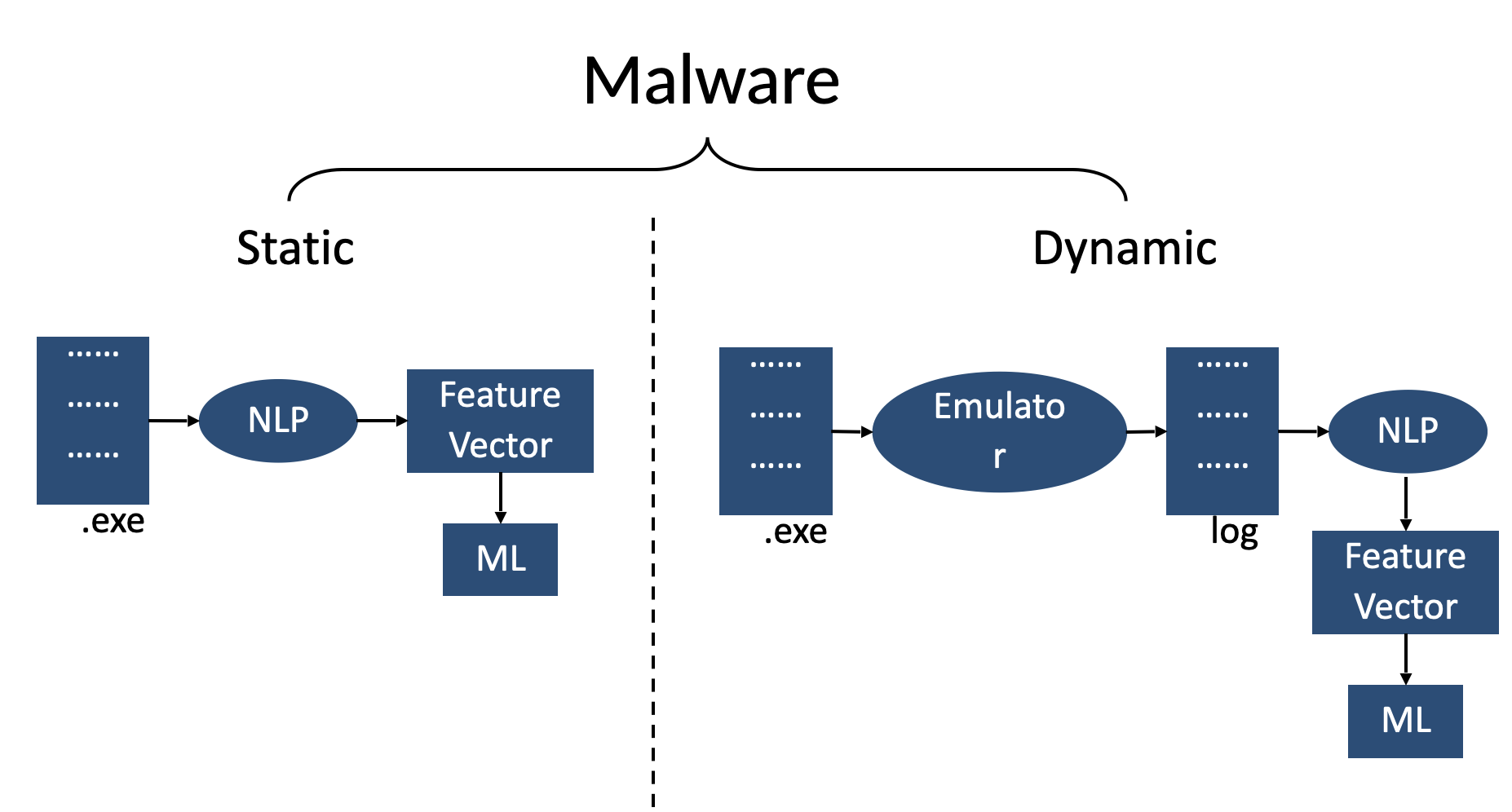
Software security relates to protecting the medium of software code and related vulnerabilities. This refers to vulnerabilities in the software itself and not on protocols such as those in Network security. For example, declaring variables in memory that are too small to store the data sent to them is a problem. If not properly coded, this could result in putting data in unintended areas of memory. A program reading data from these unintended areas of memory could result in unexpected behavior including attacks (e.g. the classic buffer overflow attack). This area also covers malware issues. Malware is any code that tries to replicate itself in the operating system (or other environments) and cause harm to the system. Common types of malware include: computer viruses, worms, ransomware, etc. The following code segment shows a simple example of how to implement a computer virus with python. Keep in mind that many viruses will be written in other languages such as C/C++ and will be compiled code. The virus in this example will look for files with a "txt" extension and try to infect them. The computer virus code has the following functions:- search()
- infect()
- payload()
Social Engineering
A Social Engineering attack can be considered as a type of cyber security attack that tries to confuse or trick humans. The goal is to get the human to do something such as clicking on a malicious link or revealing secret information. The classic example of social engineering is the phishing attack. Phishing attacks can be done via email. Usually information is provided in the email to trick the human into clicking on some link.Cryptography
Cryptography is a huge area that is critical to cyber security. Many people think of it as methods to scramble data. This general understanding relates to making data unreadable except for the authorized parties. However, cryptography can also be used for integrity checking, authentication, and for many other purposes. Claude Shannon was one of the first people to consider the problem of cryptography rigorously. He was mainly concerned with the question of "What makes a secure cipher?". He proposed the following relationship as a metric to measure how secure a cryptographic cipher can be. \[ P[ \; E(k, m_0) = c \; ] = P[ \; E(k,m_1) = c \; ] \] The previous equation relates 2 outcomes measured by probabilities for two encryptions given $ m_0 $ and $ m_1 $, respectively. Think of the equal sign comparing the 2 probabilities as more of a semantic equality than, say, an algebraic equality. Both encryptions use the same algorithm (E) and key (k). The difference lies in the inputs given to "E" which are $ m_0 $ and $ m_1 $. The produced cipher is also the same in both cases. The equation is used to define how to measure a secure cipher (E). The central idea lies in the probabilities which should be the same. Therefore, a secure cipher is one where, given the "intercepted" cipher (c), you cannot tell if "c" was generated from $ m_0 $ or $ m_1 $. They should both be equally likely to have generated "c". The cipher "c" does not reveal any information about the original message. Cryptography and ML may initially seem like unrelated areas. We will later see that there are, in fact, some techniques from machine learning that can be used in the context of cryptography. Entropy is sometimes used in an operating system to find encrypted files, for instance. A popular Python library used for cryptography is "PyCrypto Dome". The following code listing shows a simple example of how to use it for cryptography.AI Assurance
The topic of AI assurance relates to creating secure and reliable AI systems. With regards to AI assurance, I will cover topics such as:- AI auditing and explainability
- Bias testing
- Adversarial attacks
- AI agent cyber
- etc
AI Auditing and Explainability
AI auditing is a new emerging field. In general, it relates to the process of checking an AI system to measure how reliable and trustworthy it can be. Explainability is the big buzzword in AI auditing. While it can be difficult to ensure that an AI system is 100\% reliable and trustworthy, it can be easier to provide more clarity into how it works. This is what "explainability" tries to achieve. A classic explainability technique that will be covered in this book is the Shapley explainability metric.Bias Testing
Bias testing relates to the process of measuring AI systems to ensure that they are fair, un-biased and trustworthy. This is a complicated topic that is still unsolved but that is very important. I will provide some examples and literature related to this topic. One very basic metric that will be discussed in this book is the 4/5s rule for bias testing.Adversarial Attacks
The classic example related to adversarial attacks involves fooling an AI system by training it with some confusing data. Attack data is injected into the training data so as to train the model to correlate the attack injected data with some specific outcome. For example putting purple glasses on images of faces and training the system to associate the purple glasses with a specific class.Introduction to Cyber Security and Machine Learning Literature
Examples in the literature of previous studies on the use of machine learning for cyber security include:- Frederick et al. 2022
- CabreraCalixRef
- SankaranCalix2013Ref
- OdayTextCyber2013Ref
- SankaranEmbedded2016Ref
- IqbalEmbedded2016Ref
AI Agents and Cyber Security
This is a new and developing area as of 2026.
This reading is important because it shows how rapidly machine learning and AI are changing cybersecurity itself, not simply being applied to traditional security problems. Advanced models can now autonomously discover previously unknown vulnerabilities, develop exploits, and chain multiple vulnerabilities together—tasks that historically required highly skilled security researchers. At the same time, these capabilities can be used defensively to discover and patch vulnerabilities before attackers exploit them. Understanding this emerging relationship between AI, attackers, and defenders is therefore becoming an essential part of cybersecurity and machine learning.
In this course, we will explore how AI can be used in both offensive and defensive cybersecurity. Each student will experiment with both a **Red Team role**, attempting to identify weaknesses, and a **Blue Team role**, attempting to detect and defend against those actions. AI models will interact with Linux virtual machines, giving students experience with AI operating within real computer systems. We will begin with simple tasks and gradually build toward an AI-based Red Team versus Blue Team exercise.